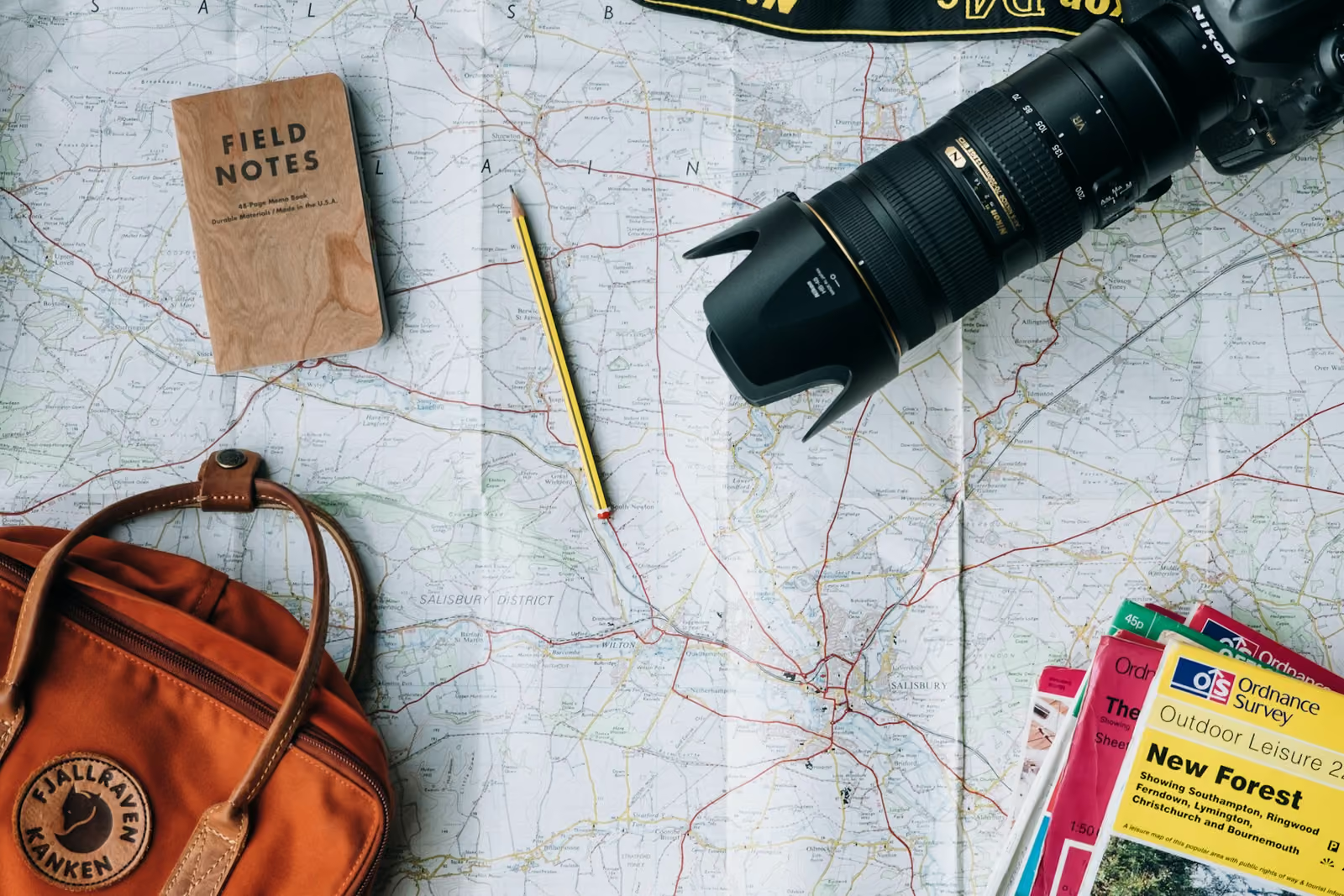
Over-planning strangles the magic. No plan at all breeds chaos and hangry arguments. Here's the simple middle path that lets you see more and stress far less.
I was, for years, a spreadsheet traveller.
Colour-coded tabs. Opening hours in one column, walking times in another, a contingency for the contingency. I'd spend an embarrassing number of evenings before a trip building the perfect hour-by-hour itinerary, as if I were planning a military campaign instead of a week off.
Then I'd arrive and quietly hate it. Because a city never reads your spreadsheet. The museum you slotted for 2pm is shut. The "quick 20-minute walk" is uphill in 34-degree heat. A local tips you off about a market that's only on today — and you can't go, because today is Neighbourhood B and the market's in Neighbourhood C, and heaven forbid we break the plan.
I was so busy running my itinerary that I forgot to actually be anywhere.
The trap is real, and it's measured
This is a shockingly common way to spoil a good trip. In a survey of 1,400 travellers, 89% said travel is stressful — and half pointed the finger straight at the time and effort of planning it. We wind ourselves up before we've even packed.
But here's the twist that changed how I think about it. Planning itself isn't the villain. A landmark study found that the anticipation of a trip delivers a bigger, longer-lasting hit of happiness than the trip itself. The daydreaming is one of the best parts.
So the problem was never that I planned. It's that I planned the wrong way — I took a joyful daydream and hammered it into a rigid timetable, then handcuffed myself to it.
The loose plan, in three parts
Here's the whole system. It fits in your head, and it's the middle path between "every hour booked" and "total chaos."
1. Anchors, not a timetable
For each place, pick just three or four things you genuinely don't want to miss. A view. A dish. A neighbourhood. That's it. Everything else stays open.
2. Rough zones, not rigid days
Instead of "9am here, 11am there," just know which part of town you'll drift around each day. If the day carries you somewhere else, wonderful — no column got broken, because there was no column.
3. A running list of "maybes"
This is the real trick, and the one most people miss. All trip long, ideas come at you from everywhere — a friend's old text, a place you walked past, a spot the barista mentioned. Instead of losing them to a chaos of screenshots, drop them all into one running list. Then, when you're actually hungry or free or bored, you open the list and pick whatever's nearby and fits the mood.
That last habit used to live in a mess of screenshots and half-remembered names for me. These days I keep it in Tripflip, which lets me swipe through a city's best spots and save the ones I like into a single list — so my "maybe" pile is just there, ready the moment a gap opens up. But the tool matters far less than the principle: collect ideas loosely, decide in the moment. A notes app or a scrap of paper works on exactly the same logic.
Why this beats the spreadsheet every time
- You stay open to the happy accident. The market that's only on today? You can just go. Nothing's stopping you.
- You kill decision fatigue without killing spontaneity. A short list of pre-saved maybes means you're never standing on a corner at 8pm, hangry, arguing about where to eat — but you're also not marching to a schedule.
- You keep the fun of planning without the cage. You still get to daydream and research and build the excitement. You just don't turn it into a set of handcuffs.
Try it on your next trip
- Pick 3–4 anchors per destination — the true must-dos
- Sketch rough daily zones instead of hourly plans
- Start one running list for every spot that catches your eye
- Leave at least one day completely open
- Decide each day's details that morning, based on mood and weather
Do that, and you'll see more, stress less, and come home with better stories — the kind that begin, "So we hadn't planned this, but…"
Those are always the best ones.
Sources: Trafalgar "Wonder Lost" survey via Travel Agent Central (89% find travel stressful; ~50% cite planning effort). Research on trip anticipation and happiness, via CNBC (anticipating a trip boosts happiness more than the trip itself).